Komodo Snorkeling Guide: Everything You Need to Know Before You Go
Komodo Snorkeling
Table of Contents
Komodo is famous for its dragons, Padar’s viewpoint and those pink beaches that seem almost too perfect to be real. But there is another reason people come here: the water.
And if snorkeling is what brings you to Komodo, you are in the right place. The reefs are shallow, visibility can be excellent, and the amount of marine life you can see without putting on a scuba tank is pretty remarkable.
There is one thing to understand, though. Komodo is not a swimming pool. Tide, current, wind and visibility all play a role, and the best snorkeling day is not necessarily the one with the most stops on the itinerary.
That is actually part of the fun.
Is Komodo good for snorkeling?
Yes, it is very good! Of course, we have snorkeling trips in Komodo, so we are hardly going to tell you otherwise. But there is a reason we chose Komodo as one of our destinations in the first place: the snorkeling here is genuinely amazing.
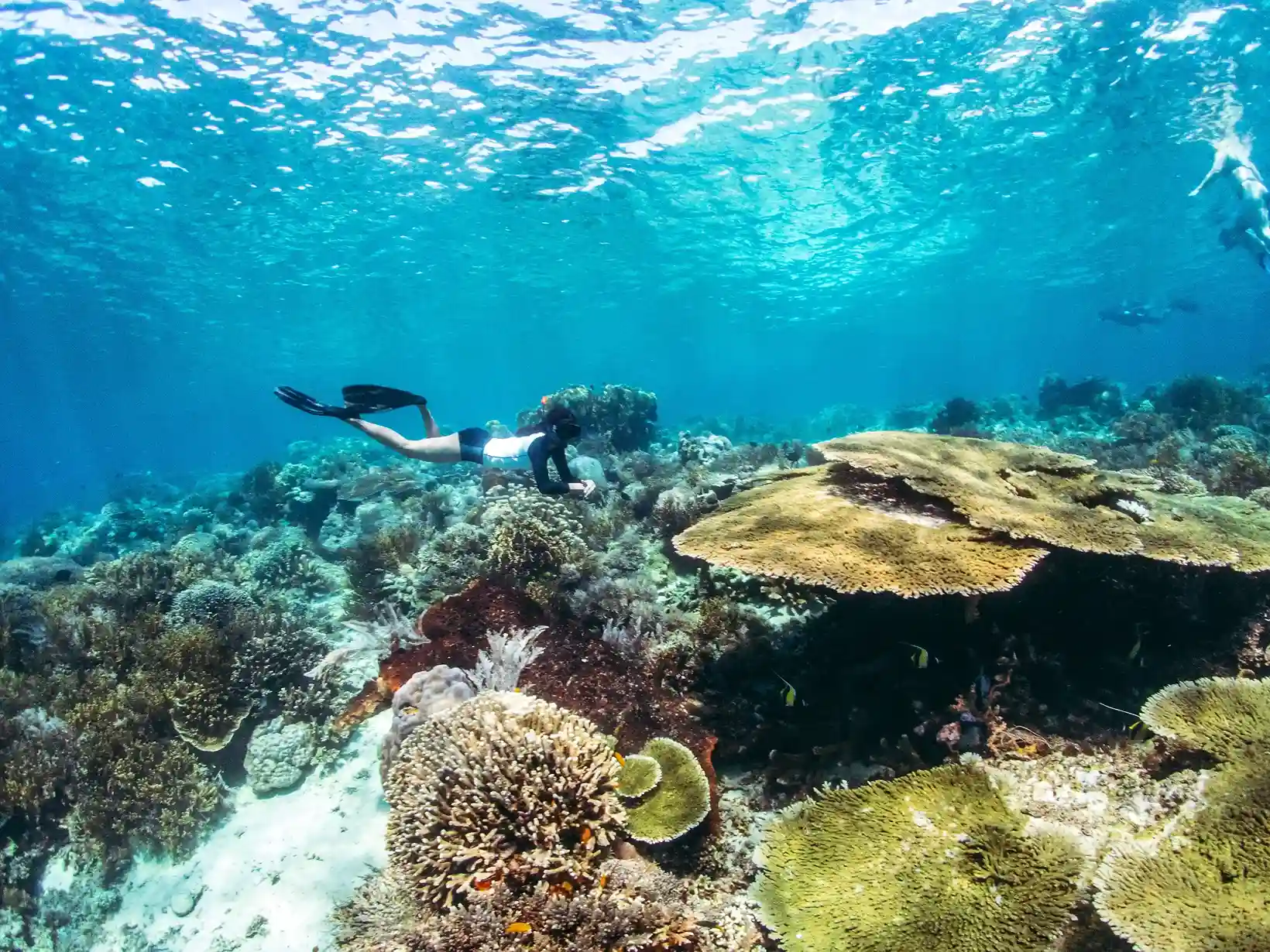
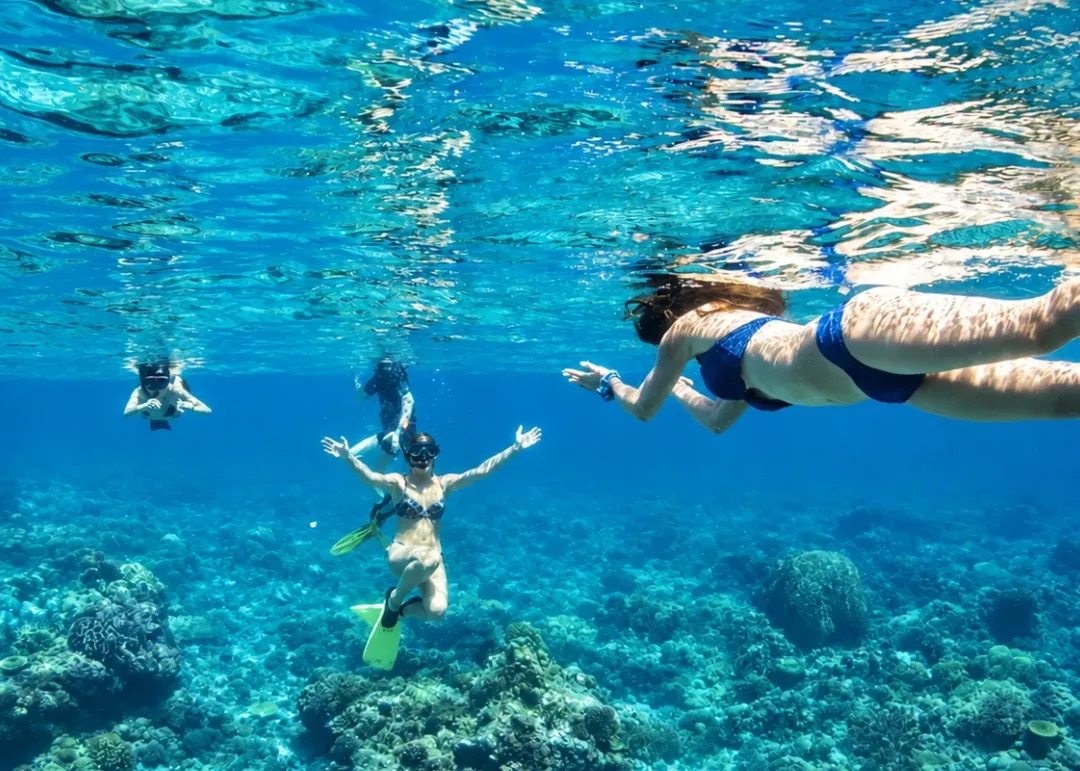
The big advantage is how accessible the underwater world is. Many of the reefs are shallow, so you do not need to dive down to see the colour and life of the reef. Stay on the surface and there is already plenty going on below you.
Komodo sits in the heart of the Coral Triangle, where the Indian and Pacific oceans meet. The resulting nutrient-rich currents support more than 1,000 species of fish and more than 260 species of coral.
For a snorkeler, that means a lot of life in relatively shallow water.
And you don’t need to be a diver to appreciate it.
What marine life can you see while snorkeling in Komodo?
Quite a lot.
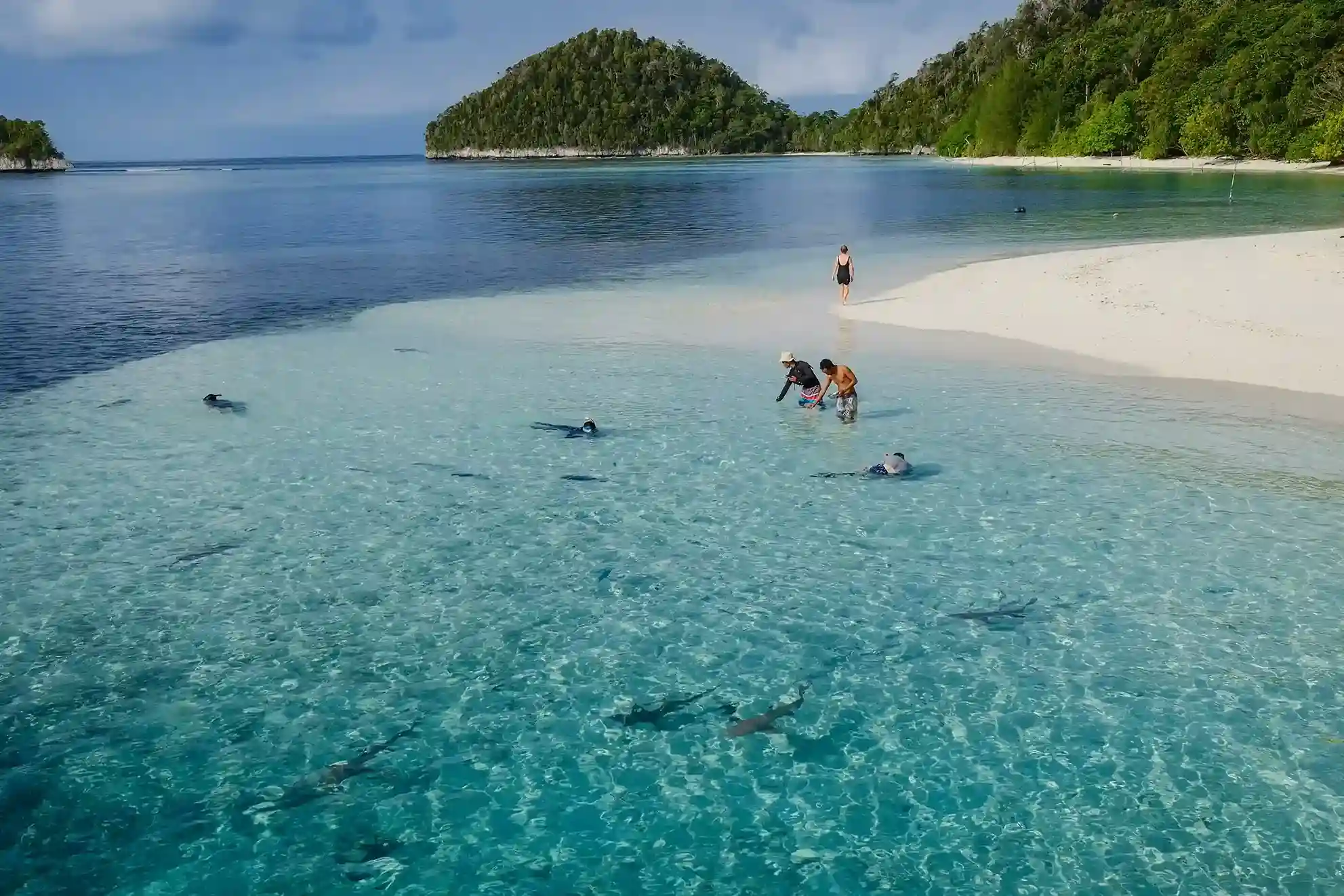
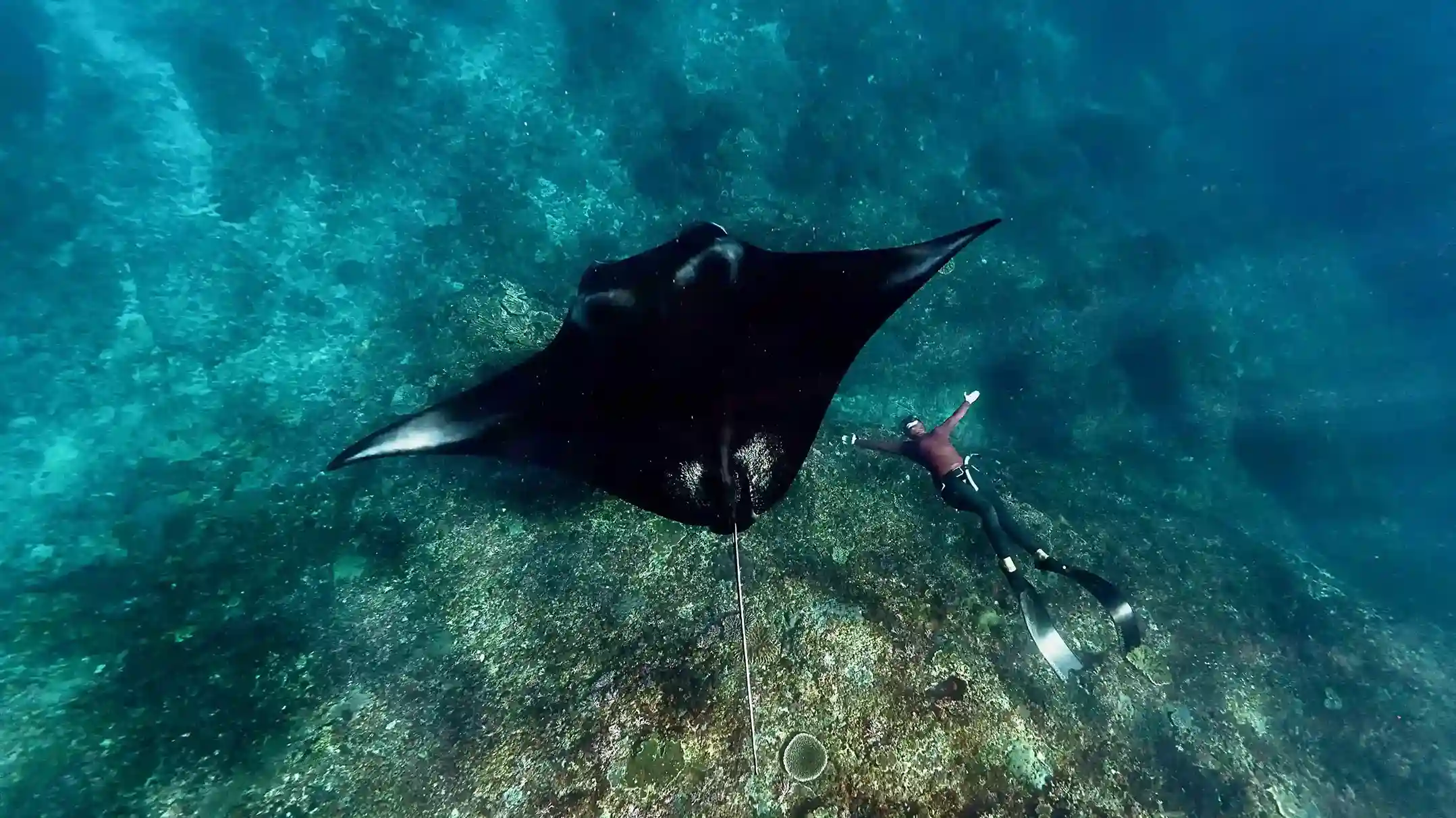
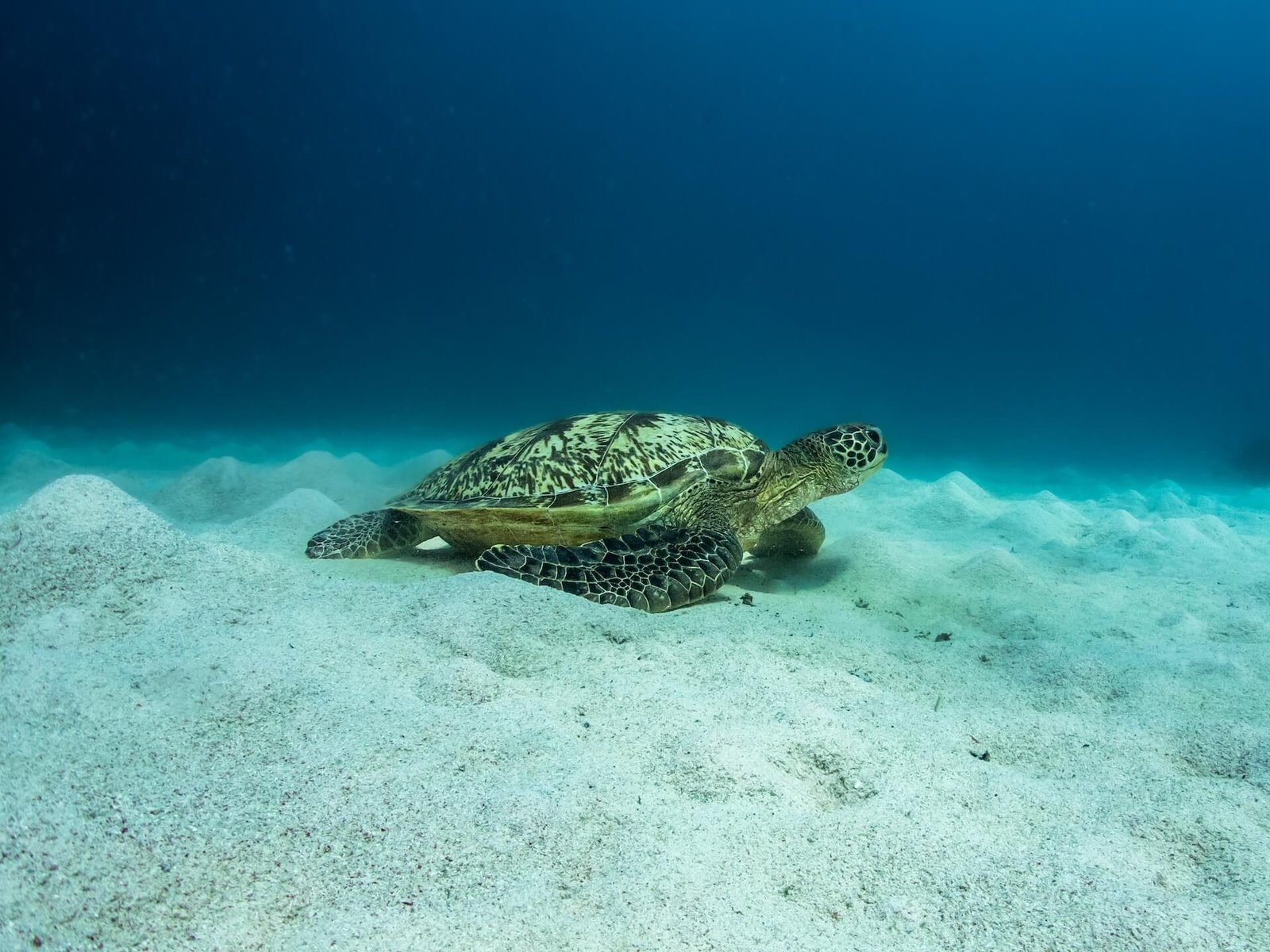
Colourful coral and reef fish are everywhere, but Komodo is not limited to the smaller stuff. Depending on where you snorkel and what the conditions are doing that day, you can encounter pelagic fish, turtles, eagle rays, manta rays and even reef sharks.
Manta rays naturally get a lot of attention, and for good reason. But we would not build an entire Komodo snorkeling trip around one animal appearing on cue.Wildlife does not work like that.
One day the mantas might be the stars. Another day you might spend your time watching turtles or following a reef full of fish. The point is that marine life is there, and there is always something worth looking for.
When is the best time to snorkel in Komodo National Park?
The main snorkeling season runs from April to November, during the dry season.
The sea is generally calmer and underwater visibility is usually at its best during these months. If you want to pick the sweet spots, May, June, September, October and November are particularly good choices.
They also tend to be less crowded than the main holiday periods.
That said, there is no magic date when someone rings a bell and announces, “Right, perfect snorkeling conditions from today.” The sea has other ideas.
This is why we always prefer to leave some flexibility in a snorkeling itinerary. Conditions on the day matter more than what a brochure promised six months earlier.
Do currents matter when snorkeling in Komodo?
They do. A lot.
Komodo’s currents are one of the reasons the marine environment is so productive, but they also mean that different snorkeling sites can behave very differently.
Some locations are calm and easy. Others are better experienced as a drift snorkel, where the current does the travelling for you.
Tides matter too. A site can feel completely different depending on where you are in the tidal cycle.
That is why a good snorkeling crew does not simply look at a printed itinerary and say, “Today we are going here because that is Tuesday.”
You look at the conditions. You look at the group. And then you decide where it makes the most sense to get in the water.
Can you snorkel in Komodo without scuba diving?
Absolutely. In fact, this is one of the best things about snorkeling in Komodo. You can see an incredible amount of marine life without ever putting on a scuba tank.
There is also a funny little optical trick happening. Stay close to the surface and the reef can look incredibly colourful. Go deeper and some of those colours begin to disappear.
So yes, you can stay on top and still get a very good view.
Snorkelers can encounter much of the same marine life as divers. You simply experience the reef from a different angle.
That’s the snorkeler’s privilege: same fish, same coral, different view.
Can snorkelers and divers travel on the same boat?
Yes, they can, because the important part is the itinerary.
If the boat is primarily following a diving schedule, snorkelers may end up spending their day waiting around while the divers do their thing. That is not necessarily anyone’s idea of a great snorkeling holiday.
Komodo actually has more snorkeling sites than dive sites, so there is no reason to assume that a dive itinerary will automatically be the best snorkeling itinerary.
For mixed groups, we recommend a boat with a dedicated tender for snorkelers. It gives the crew much more freedom to take snorkelers to suitable locations while the divers are doing their dives.
If snorkeling is your priority, a dedicated snorkeling boat gives you even more flexibility.
And honestly, that makes sense. Why spend your snorkeling holiday following someone else’s bubbles?
How do you choose a snorkeling-focused liveaboard in Komodo?
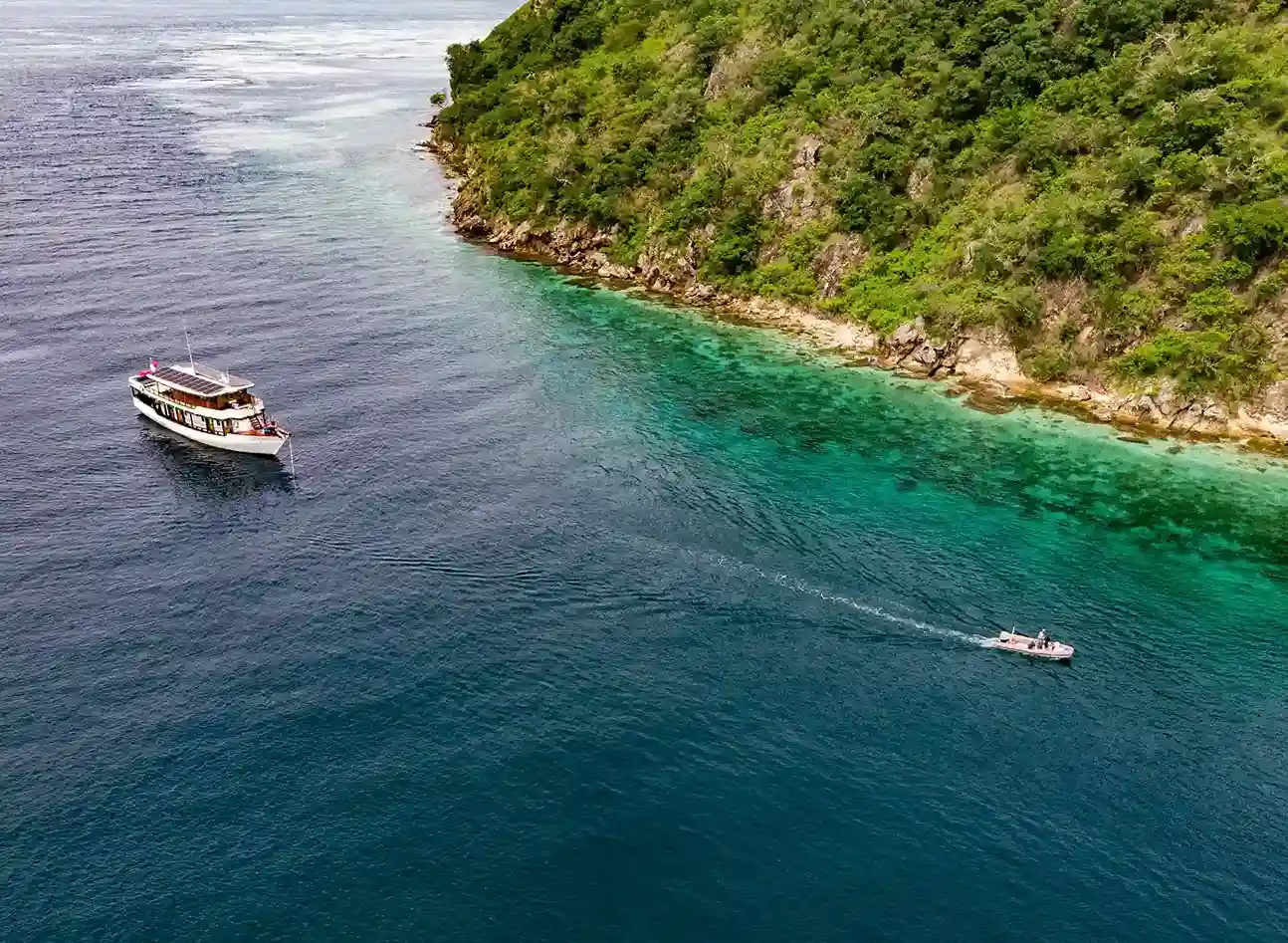
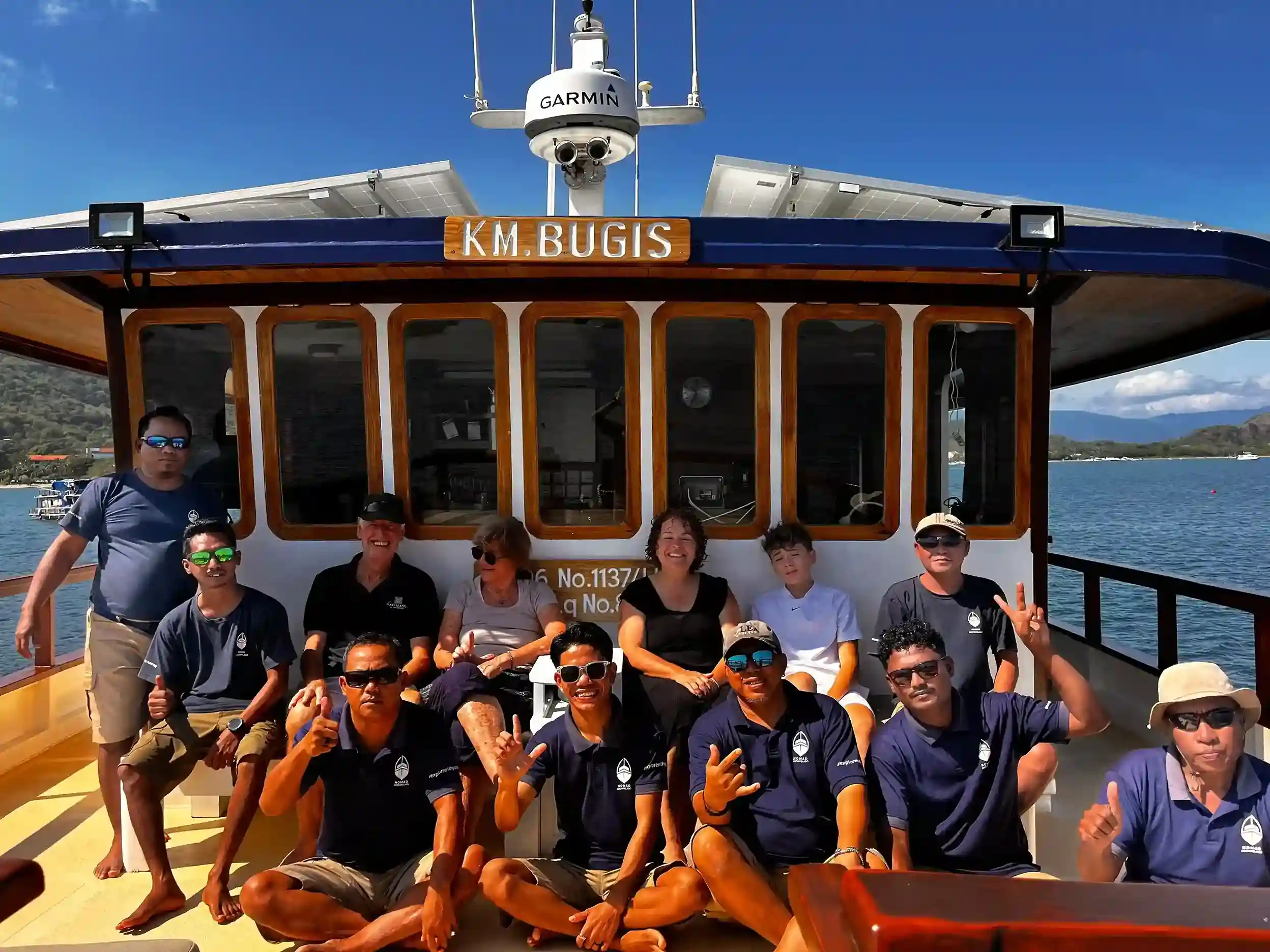
If you want to spend several days snorkeling in Komodo, a traditional liveaboard is usually the most comfortable option. Boats like the Bugis and the Bajau carry smaller groups than many larger cruise boats, offer more space and handle choppy seas better. They also make spending several nights at anchor much more comfortable.
A classic Komodo itinerary usually includes Kelor Island, Kalong Island, Padar Island, Pink Beach, Komodo Island, Manta Point and Kanawa Island. But don’t assume every phinisi offers the same experience. Some operators offer smaller groups and more personalised itineraries, with additional snorkeling locations.
And if snorkeling is the main reason you are coming to Komodo, that is where the details really matter.
Start with the snorkeling, not the boat. How many snorkeling sites are included? How much time do guests actually spend in the water? Does the boat also cater to divers? If it does, how are snorkelers looked after? Is there a dedicated tender? Can the itinerary change according to conditions? How large is the group?
These questions tell you much more than a gallery of beautiful boat photographs.
The prettiest boat is not automatically the best snorkeling boat.
Our boats are gorgeous, too, but at Nomad Archipelago, snorkeling is not something we add to a Komodo itinerary because it looks good on the website. It is the reason we are here. We build our trips around being in the water, taking our time and giving the crew enough flexibility to make the most of the conditions.
That is why we believe Nomad is the best liveaboard cruise for snorkeling in Komodo.
What makes a good snorkeling itinerary in Komodo?
This is where we think things get interesting.
A good snorkeling itinerary is not a competition to see how many names you can tick off in three days. Komodo has enough snorkeling locations that there is room to adapt.
Maybe the current is better at one reef in the morning. Maybe another location is busy, so it makes more sense to go somewhere quieter. Maybe visibility is excellent somewhere you had not originally planned to visit.
A good crew needs the freedom to make those decisions. And make you comfortable in all aspects of a cruise.
The tide, wind, visibility, current and experience of the group should all influence the day.
This is also why we prefer slow travel for snorkeling. You spend less time rushing between famous places and more time actually doing what you came for.
Getting in the water.
How many days do you need for a good snorkeling experience in Komodo?
If you want to combine snorkeling with Komodo’s major highlights, two days is the minimum we recommend.
But if snorkeling is the priority, three to five days will give you a much better experience.
More days mean more snorkeling sites, more time in the water and a much slower pace.
They also give you something that a one-day itinerary simply cannot provide: flexibility.
You have more chances to avoid the crowds, visit less-visited reefs and choose locations based on the conditions rather than the clock.
It is quite simple.
The more time you have, the better your chances of having really good snorkeling.
Is a multi-day snorkeling trip really worth it?
If you are coming all the way to Komodo because you want to snorkel, we would say yes. And because we’re Nomad Archipelago and we advocate for slow travel, we have to answer that it should be the only way.
A day trip can show you the highlights. A liveaboard gives you time to experience the park. There is a difference.
You can spend longer in the water instead of watching the clock. You can move at a slower pace. You have more opportunities for wildlife encounters. You can avoid the busiest places when necessary and spend time on reefs that are not part of every standard itinerary.
And you get to wake up somewhere completely different the next morning. That is a pretty good way to start a day.
Komodo snorkeling: the short version
Yes, Komodo is very good for snorkeling.
But the best experience does not come from trying to squeeze every famous location into the shortest possible trip.
Go in the right season. Give yourself enough time. Choose a boat that actually understands snorkeling. And leave some room for the people who know the water to make decisions when the conditions change.
Because Komodo is not just somewhere you visit between Padar and Pink Beach. For us, the reef is the d